Thursday, December 7, 2023


DOES CUPID HANG OUT AT THE SHOOTING RANGE?


“Where’d you learn to shoot, little lady?” he winks at me and raises his bushy salt-and-pepper eyebrows in that “you’re just a sweet little thang and lucky I bothered to notice your tight little hind quarters” way.  
I sniff; set down my headphones and head for the exit, trying to contain that swaying thing my butt does when I wear my boots with these jeans.  No sense encouraging the jerk.
“You got aim!” he calls after me, and when he chuckles he sounds like some kind of appliance on the fritz.  I know he’s thinking “you don’t know it but I use this line on every little honeylamb comes through this shooting range trying to handle a gun so she can protect herself when some scumbag breaks into her frilly little apartment; but she’s not going to be Wonder Woman when it happens, no matter how many hours she spends at the shooting range, she’s gonna turn into Miss Muffet.”
I keep walking outside to the parking lot hoping he doesn’t follow.   
Last time it was a young kid, not twenty, still dealing with a little acne and that whole hands and feet too big for the legs and arms thing that another year of growing will cure.  Something was wrong with his eyesight too.  He acted like he saw Casanova played by Brad Pitt in the mirror.  
He followed me to the parking lot; and sidled up to me.  
“Nice shooting in there.  I find violence in a woman very attractive.”
This would have got a big laugh in a theater in one of those movies about some loser trying to upgrade.
“There’s medication for that.” I said, glaring with what I hoped looked like utter contempt.  I turned and walked away, listening to his fake laughter.
Gosh, what I have to put up with just to have a hobby!
You’d think a guy wouldn’t hassle a woman at a shooting range. I mean, why don’t they feel intimidated? Doesn’t it occur to them that she might be a little deranged, maybe even hiding a weapon in her purse?  At the very least  why don’t they worry that she could be packing a deadly combination of mace and PMS?  
That’s the real reason I took up shooting, I just want to be a little intimidating to somebody.  I’m short and my voice tends to high and breathy and guys always think I’m fragile and younger than I am.   I’m getting pretty tired of being called “little lady.”  I want to be taken seriously and I figure, an ability to wield deadly force might help a little.
I’ll admit that I also took up guns to meet guys.  But it didn’t work, at least not like I thought it would.  I keep meeting all kinds of Mr. Wrong. 
I’ve spent enough time at the shooting range to know I’m never going to find the love of my life there.  The guys who hang out at the shooting range still have faded “Bush-Cheney” bumper stickers on their dented Cadillacs and pickups;  I prefer the kind of loser that hasn't removed his  “Gore-Lieberman” from his  Toyota and will let me pay for dinner (but not every time).  Like Kirby, a guy I met in the waiting room at the optometrist; now there was some serious dating potential, that is, until he told me about his, er, rash......
Yes, I’m disappointed, but my time here at the shooting range hasn’t been a complete waste.  Sure I have to put up with these petty annoyances, but I feel taller just knowing I could kill them if I ever needed to.
 I’ve  left Mr. “Honeylamb” in the dust, but he’s left me in a bad mood.  I’ve decided I’m not coming back to the shooting range.   I’ve got my little pink (yes, pink) pistol the size of cigarette lighter in my purse and I know how to use it.  That’s all a girl really needs, right? 
 I get in my teensy little pink sports car  (yes, pink) and push the accelerator hard, flying out the exit road that winds through woods.  
Out of nowhere there’s a flash of man in a green uniform and I’m forced to torture my brakes big time.  A million things happen in one second:  I think “oh, damn!”; the man covers his ears to blot out the screech of my tires; he looks at me through the windshield in sheer terror because he’s thinking, “Sheesh, what a stupid way to die!” because there’s no time to jump out of the way.   And I’m thinking maybe he flashes for a second on “Hey, she’s kinda cute!” or “How’d she get a car this color?”
Somehow, miraculously, my car scores a perfect 800 on the Physics SAT and comes to a stop before hitting that uniform.  I’m shaking and out of breath, with a superhuman grip on the steering wheel.   I look up and get a good look at him.
He’s not too tall, not too dark, not too handsome.  He has ears a little too small, eyes a little too big, a little gap between his front teeth when he smiles, which he is doing in almost tearful relief as I get out of my car and begin to apologize.
“Jeez, I’m sorry.  You all right?”
“Me?   What about the ducks?” he says.
And I think, “Oh, great, another one.”   
“I was playing crossing guard for them when you zoomed out of nowhere and--”
He points to a family of ducks that are toddling in single file across the road, and -- is it my imagination or is Mama Duck sending me a hateful glance as they go by?   The nerve!  Hey, I’ve got a gun  in my purse and I could make you somebody’s dinner in a Chinese restaurant? You fine feathered ---.  You almost got me and this weird-o killed! 
“Crossing guard?  Hello?  They’re birds!  BIRDS.”
“I’m a park ranger.  It’s my job to look after them.”
“Oh.”
A park ranger.   
I gotta admit, the ducks are adorable, waddling across the street like they own the place.  Which they do I guess, since this is government-protected parkland.  The babies look like they’ve all got bad haircuts, but I kinda like their little webbed feet. 
“Make Way for Ducklings!” he says cheerily.
This guy’s getting to me. 
“Wow.”  I say, “That was one of--”
“My favorite books when I was little.”  We say it together.  We both smile.
That gap between his teeth is looking, well, really charming.  I toss my hair and find myself wondering if he’s noticed how great I look in these jeans.  Thank goodness I lost all that weight.
“Yeah.”  I say.  And then, I’ve got no idea what to say next.
“Cute car.”  he says.  
“Thanks.” I say.
“I don’t think that color would have looked good on me.”
We both laugh.  Yes, he’s definitely flirting with me.
I sigh, look around, willing my brain to come up with something witty to say.  Brain is apparently in neutral, because nothing comes.  
Then, my eyes stray to his name tag.
 “Again, I am so sorry, Mr.....Wright."


THE END

Monday, December 4, 2023

 2009


LEAVING FOOTPRINTS


As the daffodil meets the warmth of spring 
And looks anew at everything,
Dreams and wishes blossom into art 
When awakened and nurtured with soul and heart.

And so this garden blooms with words
Of both solemnity and mirth.
A gardener has thoughtfully tended here,
Leaving footprints in the earth.


 2018


COLD WAR

In the dark night the baby came. Too early.

While a thick blanket of snow fell outside my window.

So tired and scared and alone

I stepped outside and closed the cabin door

At frozen daybreak.  Hurry, hurry hurry.


Surrounded by gray mountain quiet

My woolen cape covering both of us. 

Tiny girl wrapped in my arms,

Her pale skin shaded from icy sunlight.

Over hill and field, my boots crunching, crunching, crunching. 


Frozen feet found the unpaved road.

My nose numb and cheeks chapped from wind.

Gloved fingers stiff with cold and hope.

Then!  The clinic ahead in the valley,

Gray smoke climbing from its brick chimney.

My breath clouds coming faster, faster, faster. 

.

Too late, too late. too late!

No mercy; they could not help.

Carried her close to my heart. 

Wrapped in my cape.

Not enough to keep her 

Warm.


I MET THE PRESIDENT WEARING A $10 DRESS (ME, NOT HIM)


1978.  We were young, married a year, both working but making modest salaries, paying $278 a month for a small, two-bedroom apartment in Alexandria Virginia.  We took the bus to work, went to cheap matinee movies on weekends, seldom ate out.

We got an invitation to the White House.  No, really.  Because we had worked in the Carter Campaign, and because my husband was a political appointee in the administration, we were on a DNC list of people to be invited to something at the White House.  When the engraved invitation arrived in the mail we were very excited.  We were to attend the festivities following a state dinner, and we would be meeting the President and Mrs. Carter and their guest, Marshall Tito of Yugoslavia.  

    Two twentysomething nobodies from Rhode Island and we were going to the White House!

Dress was black tie.  Easy for my husband to rent a tux.  I had nothing to wear.   And there wasn’t a lot of money to buy something, either.  I searched the mall for a bargain.  Nothing in Hecht’s.  Nothing in Woodies.  Days went by and the date was getting closer and I was getting panicky.

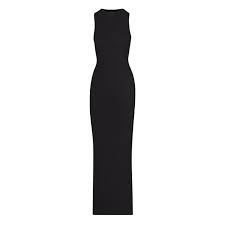
One day I went into Sears to buy some paint for our bathroom.  I wandered by the ladies dresses, and saw a single rack with a big “SALE” sign on it.  I gave it a perfunctory once-over and turned to leave when something caught my eye.  A dress.  Black.  My size.  A simple, sleeveless, v-neck, floor length sheath.  Price tag:  $10.  No, it couldn’t be.  

I tried it on.  It looked damn good.  I bought it with my Sears charge card, the only store charge I owned.

In Woodies, I picked up some costume gold neck chains for more than I spent on the dress.

We were quite a handsome pair the night we walked into the White House.  It was such a thrill to be there, to meet Marshall Tito (who would be dead not long after).

It was a very special evening.

And I well remember shaking hands with the President and thinking, I’m at a black tie event at the White House and I’m wearing a $10 dress from Sears!


THE FIVE-DOLLAR DRESS

I’ve only had that kind of shopping luck one other time.  One January, I learned I was invited to the formal Blarney Ball, an annual gathering of Irish Americans who party and raise money for a worthwhile cause:  bringing children from Ireland over to the US in the summer, to get away from the “troubles” for awhile.  I wanted to wear green velvet, and I set out hunting the sales to find one.  I went from store to store, trying on this dress and that dress, and not finding any in the green velvet I was dying to wear.  Nothing was right.   The ball was only three days away and I still had nothing to wear.  I had tried on gowns in all colors and and prices, but nothing was right.

After a long day trudging from store to store, I decided to return to Macy’s to the sale rack and settle for the plain short green velvet dress I had tried on earlier.

Then, nearby, I saw it.  There was only one like it, but it looked perfect.  It was a designer dress, green, floor length, velvet skirt and rayon empire top with long straight sleeves.  Simple, elegant, and beautiful. And my size.  I tried it on.  I loved it.  I didn’t care what it cost, this was THE DRESS.

I still liked the other dress, and decided to take both.  At the register, the clerk rang up the purchase and asked me for $35.  “$35?” I said, “For both of these?”

“Yeah,” said the clerk, while chewing her gum.  “This one is on sale for $30,” she said, pointing to the short dress, “and this one is $5.”  

“Are you sure?”  I said, my eyes must have been the size of golfballs.

“Yeah, this is the last one and we want to get rid of it.”

SO, I wore a $5 dress to the Blarney Ball.  And contrary to what you might expect, almost no one else wore green velvet.


 ASSORTED SHORT STORIES AND POEMS


THE THRILL OF A LIFETIME

After his 60th birthday, Robbie started telling people to call him "Rob" and began thinking of himself as old.  He lived alone and his parents were dead.  Looking backward instead of forward, he faced the facts of his life:  he would never go to college; he would never travel to Australia; he would never be part of a rock band; he was never going to be a father, and now that his second wife had left him he would never marry again.  He would never quit smoking; and he would never be back to his high school weight until he was sick and dying.  Someday he would be buried in the same boring town where he was born.  The black grime under his fingernails was never going away because he was going to run the Exxon station until he dropped. 

  Of all the nevers he had to face, the hardest to think about was this:  he would never see Wendy again.  Wendy came to mind on this particular day, as he packed up his apartment so he could move to a smaller one because his rent had doubled and his income had not.  He packed his collection of LP's and when he came across his high school yearbook he went to the page where Wendy smiled at him with pearly white lipstick.  Wow.  The sepia colored Loring photo obscured the color of her hair that she complained about but had driven him crazy with yearning to touch.  Her smile reminded him how much he had liked her naively upbeat view of the world at a time when he mocked everything as dark and pointless.  He stared for a moment at the photo, then snapped the yearbook shut and dropped it in a box. 

She was the one who got away. But now he was sure they never had a chance. She was a lawyer’s daughter, an only child in a family with a country club membership.  An honor student who played cymbals in the school marching band.  A girl filled with optimism, school spirit and lots of friends.  He was a kid who grew up with four younger siblings he had to look after because there was no dad and Mom worked two minimum wage jobs. Robbie was a rebel, a cutter of classes and the most successful seller of marijuana in the school.  Wendy wore penny loafers shiny as her auburn hair.  He wore stained tee-shirts and faded jeans from the Goodwill store.  She was a passionate fan of the Beatles; he thought they were overrated and preferred Grand Funk Railroad.  A golden "Wendy" necklace decorated her throat; a hard pack of Marlboros left its outline on his back pocket.  

Wendy was obsessed with NASA and the space program.  Robbie ‘s ambitions topped out at playing guitar in a band and buying a pickup truck.  He mocked her ponytail and her clothes and her family.  He offered her joints of good Columbian and tabs of acid, but she always said no, thank you. He dreamed about changing her, taking her cross country with him in his truck and living in L.A.  He ignored the fact that she was accepted to MIT and he was probably not going to get his diploma. Still, they continued an odd friendship.  They joked around in class, spent hours on the phone.  They never became a couple, even though others in school thought they were.  Robbie never let on to her that he thought she was perfect; that he couldn't believe or understand why she talked to him at all.  Maybe it was because he was witty and made her laugh.  And back then he looked sort of like James Taylor.  (Well, if James Taylor was heavier and not so tall. And wore glasses.) 

Life hadn't treated him well.  Not at all.  So many nevers.   Maybe if he and Wendy had got together things might have been different. But 1969 got in the way. Wendy's biggest thrill was the Apollo 11 moon landing, Robbie's was scoring two $18 tickets to Woodstock in a drug deal.  

Those Woodstock tickets were set in a frame and hung on the wall.  He took it down and stared at it.  Maybe they were worth something now.  

When he got them, he called Wendy.

"I've got tickets to this outdoor concert next week in upstate New York." He told her.  "Let's go."  They would hitchhike.  Camp in the woods.  It would be a blast.  What an adventure! 

"My parents would never let me." She said, "Besides, why would I want to do that?"

This pissed him off.  They were on different planets.  She would never be his hippie chick.  He wouldn't be able to change her.  He hit back, told her she should tell her parents to go fuck themselves. 

“Do something real for a change! Break some rules, baby!”

“I’m leaving in two week for school.”

“You’re never going to be an astronaut.”

“Thanks.”

“You are such a fool.”

 She hung up on him. 

He threw those Woodstock tickets in a drawer .  He saw the news coverage on television.  The stopped traffic on the New York Thruway.  Rain, mud, debris, portajohns.   Sex, drugs and rock ‘n’ roll looked like a weird kind of fun.  He was secretly glad he wasn't there. 

Wendy left town and they never spoke again. 

When the Woodstock movie came out a few months later, everyone went to see it.  Everyone talked about it.  Robbie started telling people he'd been there, and showed his tickets to prove it.  He said he tripped with John Sebastian and bathed naked in a river a girl with a hair to her waist.  His friends treated him like a hero; people asked him about it all the time, just as they asked returning soldiers what it was like in ‘Nam.  

Woodstock became his thrill of a lifetime. He told the stories so often he almost believed he had truly been there. 

In 2015 he found Wendy on Facebook.  She was a grandmother.  Her hair was still red – had to be from a dye-job.  She was some kind of office clerk at the Johnson Space Center in Houston. She posted a picture of the thrill of her life:  when she shook Neil Armstrong's hand at an Apollo 11 anniversary event.   Rob shook his head and lit a cigarette. Hadn’t he tried to tell her in 1969 she’d never become an astronaut? He considered sending her a private message on Facebook.  He thought better of it. 

He tossed his framed Woodstock tickets into a box along with his collection of baseball cards and Penthouse magazines and his Colt-45 beer mug.  His Schwarzenegger and Stallone DVDs went into a nearby trash can.  

Suddenly he got choked up.  All those nevers. 

Wendy.  What could have been.  Should he have tried harder to keep her?  Maybe.

But one thing he was sure of: 

He damn well should have gone to Woodstock.  Maybe then everything would have been different. 

THE END


*******

2020


HAIKU:  Crowning Glory

Let go.  Let it grow.
Time to let everyone know.
Its color is:  Snow.


*******


At a writers worshop, 2015:

ANASTASIA

Brendan’s rescue pup
His dog.
Our dog.
His again.
Ours again.
Old now.
Gold now.
White of face.
Special place
In the hearts of all.
She still loves to chase a ball.

When she leaves us
She will go
Find her boy with the halo
Answering Brendan’s call
And in heaven chase a ball. 


*******


2019

THE TALKER

His plane departed Orlando International Airport for his hometown of Boston more than an hour late.  As a result, when George Marks, the motivational speaker, arrived at Logan Airport, he was forced to hustle through the terminal, jump into a taxi and push the driver to rocket him straight to the conference center, as he furiously texted that he was on his way for his scheduled appearance there. 
It was a packed house that anxiously awaited him at this highly-promoted event.  Having paid twenty-five dollars apiece to sit in an under-air-conditioned auditorium, the audience was a mélange of all sizes and shapes, all ages and stages of life, hungry for the knowledge of the new concept Marks would unveil that promised to change their lives.   This Boston appearance was the kickoff in a six-city tour that would change George's life too.  
As he exited the cab and ran up the steps into the building, adrenaline pumping through his body signaled his performance readiness, despite his annoyance at being late.  This was the big break, what he had been working toward for years.  It would mean selling thousands of copies of his new book  "Messages from the Heart: How to Figure Out What You Want and GO GET IT!".  Maybe millions of copies.  It wouldn't be like the first one, ending up on all those discount bookstore clearance shelves and leaving him without an agent.  The most important thing this would mean was that Kristina would finally see that she could believe in him; he was not a snake oil salesman.  He would be able to buy that 40-foot boat he'd promised her and they would sail all around the world, like she wanted. Now, after four years together, she would finally agree to marry him.  He imagined the renewed love and admiration in her eyes, her smile of approval, future children with her dark curls and long dark lashes. 
There was no time for his customary offstage preparatory breathing and stretching exercises; he ran straight out to the podium, shaking hands with the host, who had worked up a flop sweat filling the time onstage while they waited for George's arrival.  The host scurried away, leaving the stage to George alone, who smiled broadly and stretched out his arms, Christ-like, embracing the bright lights and a theater full of captivated, smiling faces.  After a quick and jokey apology about his lateness, he launched into his always-successful icebreaker story about the rhinoceros and the penguin. And then his eyes fell on the single empty seat in the front row.  

At Logan Airport, Kristina moved through the crawling security line, a tight grip on her passport and boarding pass.  She looked at her watch and thought about George.  He would be done with his speech now.   She wondered if he noticed she wasn't there. Probably not.  George tended to miss important details.
Little things, like who she was.  
She had grown up with one dream:  to travel to South America, to touch the land of her ancestors.  To see the small Colombian town where she had been born and the orphanage from which she had been adopted.  To eat unfamiliar dishes in Brazil. Party in Rio de Janeiro. Hike in the Andes.  Go to the bottom of the world.  Visit Macchu Picchu.  All her life she had known she would have to do this someday, and her parents had never discouraged her. The contrast between their pale hair and freckles and her flawless bronze skin and thick, dark hair had been a daily reminder that she came from somewhere else, a place that called for her return. 
George was always talking about a boat.  She didn't like boats.  She told him she needed to visit South America at ground level, to walk it, feel it, be with her people.  Why did he think she had been taking those Rosetta Stone Spanish and Portugese lessons for a year?   Last week she told him she was going to buy a plane ticket. 
He kept talking about their future together. The new book.  The tour.

On stage, George was on autopilot; he'd practiced this presentation a hundred times.  He had this.  Why was it so hard now?   He talked, but with each word he increasingly felt he couldn't catch his breath, as if he were still running. He was gulping air.  Damn airline! Totally got me off my game!  Damn!  
The empty seat in the front row mocked him.  He lost track of his thoughts; lost his place in the monologue, broke into a cold sweat.  He took off his jacket, rolled up his sleeves, loosened his tie.  Talking.  Talking.  Talking.  This is what he was good at.  He could make it look effortless, usually.  This time he was talking, but thinking, "Shit, this is not going well….."
The faces in the crowd began losing their smiles.  Some leaned close and whispered.  
His mouth kept moving, but he was dying.
He stopped, looking at the floor of the stage, trying to regain his mojo.  Gone.
"I - I'm sorry.  I'm not feeling well…." He turned and stumbled off the stage, collapsing to the floor as soon as he was out of the lights. Members of the stage crew rushed to his side.  Someone said, "Call 911!".  Someone said "heart attack." Someone else said "stroke".  Before he passed out he heard another voice say, "panic attack."

A little while later, after the ambulance left, the host came out to the podium, mopped his brow and explained that their honored guest Mr. Marks was going to be okay, but due to an unexpected health emergency, his appearance would have to be canceled.  He apologized and dismissed the audience, promising refunds.  As the audience mumbled and grumbled and filed out of the giant hall, several took one last dismayed look at the stage; at the massive, brightly colored Power Point backdrop:  a photograph of a smiling George Marks, with the tag line, GEORGE HAS THE ANSWER!  ALL YOU HAVE TO DO IS LISTEN!"

THE END


*******


(Abridged version)

HE LAUGHED AT THE UNIVERSE

He was irreverent; too wise for a world of
Illogic and serendipity and irony.
Nothing was sacred or immune from mockery. 
Himself included.
You had to laugh. 

In Paris, he wore a black beret.
At the Louvre, in a hall of priceless antiquities
Climbing upon a pedestal 
Behind a headless nude
Laid his chin and bereted head
And now the statue had a smile.
We took a photo and laughed.
A docent came running, shouting in French.
We had to leave.

Dark humor expressed in his drawings.
A cartoon queue of happy stick people
Climbing a hill to a banner:  “You Can Fly!”
Not seeing the cliff on the other side.
Falling, falling, falling…..
Landing in a heap; bewildered, betrayed.

He made us laugh; some said he was troubled.
It was only that he laughed at the absurdity
Of the universe.
“No Trespassing” signs should be ignored.
Fences should be climbed.
No rule should go unbroken. 
Under his beret he thought that statues don’t mind.
And there are many ways to fly.

Then, age 30, a sudden, random, ironic ending
(He would say a Darwin award winner)
Falling like his stick people while he was dreaming of other things.
Somewhere, he is laughing at the absurdity.

------------------------------------------------------------------


THE FERRY


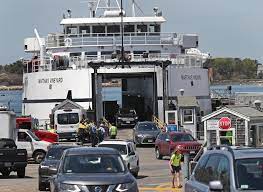
She doesn’t swim.  Never liked boats.  Especially if they tip or rock.  She only boards this one, the Martha’s Vineyard ferry, one round trip each July for a few days visit, because Dan spent his childhood summers here and he needs it.  But she can only step on the gangway if it is a sunny day, the ocean waters calm. Dan always holds her hand during the entire half-hour crossing.  She isn’t afraid when he looks in her eyes; when he says her name.  Rachel. 

Something isn’t right.  Why is she here now on the ferry? And where is Dan?  She fights panic.  No calming sunshine this trip.  Leaden sky. Choppy stone-colored ocean.  Icy wind and rain whip her face and frizz her hair. She stands on the top deck, white-knuckle gripping the railing and looking down at the whitecaps.  

Crazy thoughts race.  Does this captain know what he is doing?  How much rocking can this boat stand before it goes under?  I used to know where they store the life jackets, but now I can’t remember.  Do they have a bathroom on this boat, because I may have to pee? Why are there no voices, no sound but the howling of the wind?  The rows of white deck seats stand empty, like gravestones. Where are the summer people? The chilled out J-Crew people who own houses on the island, with their smiles, their toned and sunkissed arms and legs, their so fashionably sun lightened hair.  A charming Ralph Lauren scene in a glossy magazine, they tease and laugh with their gleeful children, push their doe-eyed toddlers in $700 state-of-the-art strollers.  They pat their well-behaved shiny black dogs that curl up on the deck at their feet.  Wide-brimmed straw hats and Red Sox caps.  These lucky people are free to wear linen, because someone else does their ironing.  Rachel hates that she needs them on this ferry because they guarantee that she is safe; nothing bad could ever happen to these people.   But they are not on this trip.  Where have they all gone? And where is Dan? How did I get here without him?  Why am I alone on this fucking boat?  He will pay for this. 

Suddenly, her thoughts clear.   It's the dream again. The wind and rain and rocking boat are not real.  Her hands relax, ungrip the cold metal railing.  She steps back from the side and closes her eyes.  Safety is within reach.  All she has to do is awaken, and everything will be okay.  Except. It won’t. 

Reality is as sharp and cold as the wind in her dream. Before her eyes open she remembers that Dan’s side of the bed is empty.  She will not smell fresh brewing coffee and will not hear him rattling around the kitchen.  The pain and dread will be real.  She will remember and ache for the halcyon days of good food and wine and music and sex, when rainy days seemed bright and sunny days seemed endless.  When they would laugh easily, and waste money and time because they thought it would always be that way.  She will ache for the salty wind in her hair and Dan smiling into her eyes and holding her hand on all those happy summer ferry rides to the island that assured her they were just like the J-Crew people; they were safe from harm. 

People say time heals.  Can she wait that long?  When will the memories of Dan no longer pour all over her brain like syrup, haunting her nights?  What will it take?  Must she take the Martha’s Vineyard ferry back and forth and back and forth to the island until the longing and sorrow fade?  

As her bare feet touch the cold floor she promises herself she will do just that.

THE END


Tuesday, April 7, 2020

April 2020

😧

INCONVENIENCE? WORRY? IT IS NOW TERROR


When I was little and in my bed in the dark, I feared a monster in my closet.  The door had to be closed tight before I could sleep, and some nights I worried anyway.  That memory has returned during this pandemic with a much worse sense of panic.  COVID-19 lurks nearby and ….. what if?

My immediate household consists of myself, my husband (both in our sixties) and a delightful 7-year old grandchild whom we adopted when she was a baby.  (Long story; it happened when the idea of a strange and nontraditional “modern” family seemed a reasonable challenge.)  We have been hibernating at home for 28 days now, our contacts with other human beings nearly zero.  We have been taking all precautions.  We stopped taking our child to the neighborhood playground weeks before they put yellow “caution” tape around it.   Our daily walk around our neighborhood is all we do outside of our home, and we steer clear of others.  We shop online. We have groceries delivered.  

A few miles away, our adult daughter lives with her two young children.  She is generally healthy, but disabled, living with a chronic condition that compromises her immune system.  She often gets minor symptoms of common illnesses that pass quickly.  She doesn’t drive.  Recently she became a single mom caring for her two young children alone, as her husband is a long-distance trucker and hasn’t been near them in many months, first because of his job, now because he may accidentally bring home COVID-19. We have socially distanced ourselves from them all for a month.

I have been grateful that my husband has been able to work from home, and that I, as a teacher, am comfortable with the idea of homeschooling our little girl, though sometimes she isn’t totally on board with this new arrangement.  I have been accepting of this way of life, and looking optimistically to the day when it will end and things will get back to some kind of normal. 

But as the daily news has become more dire and scary, I have begun to feel that “monster in the closet” feeling too often, especially in the middle of the night, when I awaken and my mind brings back terrifying panic of “what if?”  It has led my husband and me in recent days to update our wills and make the call to several relatives to ask, “Can we put your name down if something happens to us?”

But that formality doesn’t address the immediate need that “What if?” might pose. If my husband, or I, or our adult daughter get sick, together or separately, we are in the groups most at risk for serious illness.  To help care for each other, we would risk passing the virus to the others.  If the unthinkable happens, hospitalization or death, what will happen to the three young children? Extended family members are thousands of miles away; the immediate need for child care is unmeetable due to travel restrictions and….who among them would want to take a chance on helping us, getting sick themselves and infecting their own families?  Never have I felt so helpless, so utterly bereft of resources, though we are fortunate at this point to be financially secure.

What services might be available to the public?  Who would be willing to provide them? How can we find them? The scenarios that play out in my imagination are not good.

Finally, the least of the worries but the one that tugs at my heart the most is this:  if their parents are suddenly gone and no one can calm their fears and meet their needs but strangers, how will that affect them? That, as all that is happening in the world now, will reverberate for the rest of their lives. I think of history; of wars and famine and plagues and think of the children who endured these events.  Some live with them today in far away places. Suddenly the things we read about in books and see on our televisions could be our reality.  It could happen here.

I keep coming up empty on a solution other than to assuage my terror by reciting childhood prayers in the dark that this awful monster doesn’t jump out of my bedroom closet.  If that happens, things will happen that can’t be planned or anticipated or controlled. I’ll admit it:  I’m scared.  


Monday, January 28, 2019


January 18, 2019

I visited Los Angeles at the height of the fires over Malibu.  These are the views from my hotel in Santa Monica, as fires raged for days, people lost their whole neighborhoods, there was fear that it would spread and threaten LA proper.  There were prayers for rain, but none in the forecast.  As the air quality deteriorated, outdoor activities impossible, I cut short my visit.

Later I wrote the following haiku.


Fear of Fire

Clear sky, nearly white.
Dry as kindling, fear of heat.
It won’t rain tonight.

Friday, September 14, 2018


RE: the TIME cover story on the plight of teachers.  

How many potentially talented teachers don't go into the field because of pay alone? And did you hear about teacher burnout? Here's another problem facing educators, especially those teaching middle and high school: they are expected to ensure a good outcome, no matter what the odds. This is especially acute in high educated/high income areas, where parents agonize over whether their child will get into Harvard. If their child doesn't earn high grades, blame the school. Here's the rub: Even the most motivating teacher will have those few resistant students who won't do the work. A teacher can't make a child brilliant who isn't. A teacher is not a social worker or a psychiatrist. But still, that teacher will lay awake nights trying to come up with the right idea to help that one student who might be reachable. Here's the truth: a teacher who positively engages most students, and changes the path of even ONE, is a success. But how many can enter or stay in a profession that pays so little for so little affirmation?

Friday, July 27, 2018

Eleanor Oliphant is Completely Fine by Gail Honeyman

Warning:  Spoiler alert near the end of this post:

A week or so ago I found myself in an airport without having packed reading material, so I picked up this compelling novel on the fly (literally!).  I give it five stars for beautiful writing, an unforgettable main character and a plot that was not frenetically paced, yet I couldn't put it down.

Eleanor Oliphant is one of the quirkiest characters I've ever encountered.  Often the stories we find most compelling are those in which we identify with a character, and aren't we all a bit quirky?  Turns out Eleanor is more than quirky.  She isn't just sarcastically funny; a traumatic childhood has made her a  judgmental misanthrope.  She has convinced herself that she is just FINE with her lonely, insulated life, boring job, and vodka best friend.

As the story progresses, she reluctantly is drawn into several warm relationships despite her resistance.  These relationships change her.   At the same time, events force her to look inward to the reasons she is the way she is.  It is painful for her; painful to read, but a welcome turning point in her life.  It's been a long time since a book brought me to tears; this one did.

But here is the SPOILER, so read no further if you want to avoid it.  At the very end, there is a twist that (in my opinion) doesn't fit with the rest of the story.  It makes Eleanor seem even more disturbed than previously indicated.  It deprives the reader of a satisfactory confrontation that one has been anticipating and looking forward to.  It is a conflict-resolution moment that never comes. It left me hanging, angry, and anxious -- my own quirky self wanted something very different and now I'm left with.....

Friday, July 13, 2018

July 2018

I was going through old computer files this morning and stumbled on something I wrote a few years ago that seems even more appropriate to think on as I get older.  And older......


-->

REGRET – IT’S JUST A WORD

            Recently while reading a magazine in a doctor's office waiting room, I saw that the magazine was sponsoring an Essay Contest.   My writer's radar perked up.  A writing challenge?  For money?  For a bit of fame?  All one had to do was answer the following question in 1500 words or less:  If you could change one decision you made in your life, which would it be?

            Oh dear.  Regrets.  Regrets.  Thus began my memory bank scan; trolling for something to write about.  Something entertaining but not too embarrassing.  Having the advantage of many years, there was no shortage of questionable decisions, varying from critical to banal to just plain stupid. Could I actually write about any of them? I began to imagine them on a colorful Wheel of Fortune, spinning and finally stopping on the following.

            When I was sixteen years old I lived in Rhode Island and had a regular babysitting job with a French family in my neighborhood who were visiting the States for one year.  The family name escapes me now, but somehow I still remember their cute little French-speaking children, a boy and a girl, named Gilles and Fleur.  I was an A student in my first year of high school French and loved being able to practice with them.  My language was rudimentary, but I could communicate well enough with them.  "A couche!" I said when it was time for bed, and off they went!  I was speaking real French with French people!  How pleased I was with myself.  When it came time for the family to return to France, they made an incredible offer.  Would I be interested in coming along, to live with them and study in Paris for one year and continue babysitting the children? 

            Excitement and fear gripped me.  I'd never traveled much, other than a few family camping vacations to New Hampshire and one big RV trip to Quebec.  But I'd never been on an airplane -- France was an ocean away!  Did I speak the language well enough?  What if I got homesick?   I would miss my friends.  What high school drama back home would I miss out on?  Would I be bored?  Did they have television in France?  Did they know about the Beatles?  What if I hated it there?  My father teased me and said, "You shouldn't pass this up because you fear toilet paper in France won't be as soft as you're used to.  Opportunities like this only come around once."  After agonizing over the decision, my fear won out and I chose to stick to the safety of the familiar.  Home.  To this day I wonder why my parents gave me a choice and didn't simply go ahead and sign me up.

            Years later, when I was fortunate to experience quite a few trips to a number of European countries including France, I realized what a momentous fork in the road that offer was.  How different my life might have been!

            What if I had gone to Paris when I was sixteen?  How would things have been different for me?  Perhaps my college ap would have been more impressive and I wouldn't have been rejected from Harvard.  Perhaps I would have majored in a more interesting and employable French instead of psychology.  My generation wanted to save the world; perhaps I would have joined the Peace Corps and changed the lives of starving children in Africa.  I picture myself teaching peace and love to the Hutus and Tutsis and preventing genocide in Rwanda.  Or, Perhaps I would have stayed in France and attended the Sorbonne in Paris.  Later I might have met a Frenchman to be my husband (he would have been very romantic and rich!).  I could have become a pencil-thin, fashion-conscious, unsmiling cheese-binging cigarette smoker with a yappy purse-dog always with me.  Perhaps one August night I might have been enjoying some jazz piano at the smoky bar in the Ritz Hotel, chatted up Princess Diana while Dodi was in the mens room.  She might have been so captivated by my ex-pat stories that she might have chosen not to leave to get in a car with a drunken chauffeur that fateful night. 

            If I'd gone to France for a year at age 16 I could have changed history!!

            On the other hand, I could have gotten sliced into pieces in Rwanda, or joined my new friend Diana in that car.   Perhaps my romantic French husband would have kept six mistresses and my cheese and cigarette diet might have led to an early heart attack.

            I could have gone to Paris and returned to little Rhode Island changed to a worldly, snobby girl; looking down at my friends and family as provincial, not fitting in, sniffing at the idea of a peanut butter sandwich.  How can you put her back on the farm after she's seen Pahree?  Or I could have arrived in Paris and quickly decided I was lonely and miserable, unable to tolerate the rough toilet paper.  I might have immediately begged my parents to bring me home, adding yet another excruciating failure experience in my young life that had already suffered from a C or two on my report card, wallflower status at dances, a serious bicycle accident, lusting after a boy who fell for my best friend, and being kicked off the cheerleading squad.  Oh, and then my rejection from Harvard.  Ah well. Teen angst might have reigned supreme whether I went to Paris or not.

            Perhaps. Perhaps. Perhaps.

            Some people say life can be a bowl of cherries.  I think of it this way: Life is like a cherry tree; each decision along the branches reaching up and out toward the blossom and fruit.  The branches on the tree of my life could have had an infinite number of different outcomes.   Had I studied in Paris when I had the chance, some other blossom would have bloomed for me, perhaps a bigger, more colorful one, perhaps a bud that never burst open at all. 

            I'll take the cherry blossoms I have in my hand.

            This magazine essay contest is not for me.  Do I regret not going to Paris when I was sixteen? What about all those other decisions on that spinning wheel? Regret? Hell NO. Regret is just a word.


Thursday, July 12, 2018


GOING OFF YOUR ANTIDEPRESSANT? EXPECT TO CRY

Recently I decided to go off my antidepressant medication, which I have taken for a long time to treat the free-floating anxiety I've had since college. Why?  Because though a psychiatrist once told me I might have to take it for the rest of my life, I felt the need to be convinced. 

This isn't the first time I've tried this.  In 2014 I spent a month taking less and less of the medication, and was beginning to feel different, experiencing some slight headaches, wondering if I was doing the right thing.  Then, just as I was about to quit completely, my 30-year old son died suddenly in an accident.  The shock and grief were unbearable, and clearly this was not the time to stop taking an antidepressant. 

A few months ago the New York Times published an article about how hard it is to go off antidepressant medication.  (www.nytimes.com/2018/04/07/health/antidepressants-withdrawal-prozac-cymbalta.html)  My doctor told me it must be done VERY slowly -- over many months of decreasing the dose gradually.  And so that is what I have done.

I can report now a touch of anxiety has returned, but so far I am finding it quite manageable.   I have noticed slight mood swings and less patience, again manageable, though a difference from being steady in that regard. But the surprise?  Who knew there was a lot of saltwater collected inside my head behind my eyes?  This apparent and annoying backup of tears is quite leaky, I have found.   I can cry, even sob, easily, quickly and unexpectedly when something, anything, moves me.  It can be a joyful moment or a nostalgic piece of music or a sad memory; or seeing on the news what is happening in my country or the world. Immigrant children! Soccer players trapped in a cave! Trump acts...well like himself!  Next thing I know:  Niagara falls!

So what to do?  I have had to invest in waterproof mascara for the first time since my teens, when I cried all the time over clothes, boys, parents, school, and frenemies. Then it was hormones; now it's apparently living life in my 60's with all that goes with that, but in both cases, to be expected.  Normal.  That is why I stopped taking medication -- I wanted to get back to normal.

Apparently "normal" for me means investing in Kleenex. (sniff!)

Tuesday, July 10, 2018


THOUGHTS ON BRETT KAVANAUGH

I haven't blogged for awhile, but I've been thinking on the nomination to the Supreme Court for several weeks since Justice Kennedy announced his retirement, making my usual anti-Trump snarky comments on FB and Twitter.  I'm not a lawyer, but this requires more.

Ever since that...er...person became President, we have expected he would be able to nominate a Justice or two.  Painful though it is for us Democrats, we have to acknowledge and admit that we knew this was coming and that thoughtful conservative voters (nice people!) who knew how terrible he is elected him anyway for this single purpose of tipping the Court rightward.  At this point, we should be relieved that the nominee isn't Sean Hannity or Ted Nugent.  Instead, we have a thoughtful, conservative Catholic.

Brett Kavanaugh is a graduate of an awesome Jesuit high school that my son attended, where the motto is "men for others." and instills a lifelong conscience of duty to help the less fortunate. His mother was a teacher, then a lawyer, which tells me, well, he had an awesome mom.  He is a Yalie -- not exactly a place to become Attila the Hun. He served at a high level and met his wife in the Bush 43 White House (which in retrospect is...comforting?).  He is father to two daughters.  All of this makes me think that he may not be as bad as the shouters are convinced he is. Having said that, I expect I will not like or agree with many of his opinions, but I know that they will come from a background I respect and that he will have given thoughtful consideration to his views.

It has never been more true that elections have consequences.  2016's are historic -- the yearning for change that elected Barack Obama mutated into, well -- now we have the worst president since 1776; a Supreme Court that will lean right-wing for several generations; conflict and bewilderment among our allies near and far and manipulation by adversaries; serious and passionate divisions among friends, families and states; and an economy that may fly too high to the sun.  All these things make us weaker and a target for a new 9-11.

No matter what the reasons (and there are many) that the 2016 election went the way it did, for now, we must live with it.  Even if he were to be removed from office, much of the policies will remain the same and the Supreme Court will continue to move rightward as long as the Republicans are in charge.  Marching in the streets and carrying signs and wearing pink hats and arguing with our relatives and friends -- these activities only help a little, and in the case of Maxine Waters and others, may actually hurt our side. The true remedy will be the ballot -- first, in 2018, and more importantly, 2020.  So protest and shout, but more importantly, do what the Parkland kids are doing:  get out and recruit and register voters and help them get to the polls in November. If Democrats get back on top, it will be a tourniquet on the general political move rightward.  But don't expect the Supreme Court to revert to 1960s liberalism.  That time is long gone.

Sunday, April 30, 2017


AND NOW FOR SOMETHING COMPLETELY DIFFERENT....

I wrote this a few years ago so I wouldn't forget the most unforgettable novel I have read in recent decades.  I promptly forgot all about The Goldfinch, and don't know if I posted this anywhere previously, but I stumbled on this today.  I hereby put it out here for anyone who loves literature and hasn't yet read this amazing book.

Loving and Hating The Goldfinch

I thought I was alone when I first thought of Donna Tartt’s The Goldfinch as “Dickensian.”  Now that I have finished this 700+ page novel and have looked back at what has been said about this book, I see that many have called it so.  Why is it Dickensian?   We have the saga of a sad, orphaned boy who drifts from adventure to adventure as he grows up, who encounters an assortment of vivid characters along the way, (many with unlikely names like “Hobie”,  “Bracegirdle” and “Kitsey”), a life journey that veers this way and that under the influence of these many encounters as he searches for someone to love and protect him.   We have the portraits of how the rich live and how the poor survive, what brings them unhappiness and what brings them joy, though joy is shortlived for all, it seems.  There is the questionable ethics of heroes and villains alike, an unrequited love.  I could go on.

I loved and hated this book.  It is the first one in my memory not an academic requirement that I finished despite my feelings of sorrow, depression, anger, frustration and disgust.  Practically speaking, the length was daunting and not every chapter was compelling.  Why did I keep reading?  Aside from not wanting to disappoint my book club, and out of respect for its Pulitzer, I kept turning the pages because I had to find out what would happen to the unfortunate young man, Theo.  Without giving too much away,  I will explain a few reasons why he captivated me.

His sadness and loneliness were palpable; yet his inner voice and outer behaviors were fascinating and frustrating in their incompatibility.  Sometimes I wanted to slap him for his wrongheaded actions.  Would he ever finally grow up and get his life together?  Would the painting be his salvation and would he ever be able to restore it to its rightful place?  Would he ever connect with a friend or relative who could show him true understanding and love?  Would he break Hobie’s heart with disappointment?  Would Pippa ever truly see the real Theo?   Would the terrorist attack be explained as anything more than a plot device?  I could go on.

This book is an experience. There were passages of mindblowing writing and philosophical asides that tapped into some of my own ideas about humanity, morality, life, death, the universe.   While reading it has left me with a kind of spiritual exhaustion, it is not because it is all sorrow and pity.  There is the painting.  The author’s use of a famous work of art from 1654 as the cause celebre in Theo’s life keeps straight the thread of his adventures.  His love of The Goldfinch, his mission to protect it, is the most reliable and beautiful fragment of hope in his difficult journey.  The irony of what we learn happens to the painting does not diminish its value to Theo. The idea of the painting, a timeless thing of beauty, is Theo’s life ring.

In the end, it has saved him: 

“Insofar as it is immortal (and it is) I have a small, bright, immutable part in that immortality.  It exists; and it keeps on existing  And I add my own love to the history of people who have loved beautiful things, and looked out for them, and pulled them from the fire, and sought them when they were lost, and tried to preserve them and save them while passing them along literally from hand-to hand, singing out brilliantly from the wreck of time to the next generation of lovers, and the next.”